
Chapter 2. The Present State of the Russian Far East and Its Future Direction
As we saw in Chapter 1, the economic linkages which existed under the centrally-planned economy have been disrupted throughout Russia, and the various regions are confronting structural problems. It is argued, in fact, that half of the decline in industrial production since the reforms has been due to the collapse of such economic linkages (Zaitsev [1996]). Large economic problems of this kind have been apparent in the Russian Far East as well. In this chapter, we will examine the situation in this region as an example of the common problem of structural adjustment in industry and regional economies which is occurring throughout Russia, and also based on its geographical characteristics, examine the direction of the region's development, placing emphasis on linkages with the Asia-Pacific region.
Part 1. The Present State of the Russian Far East
- Overview of the Russian Far East Economy
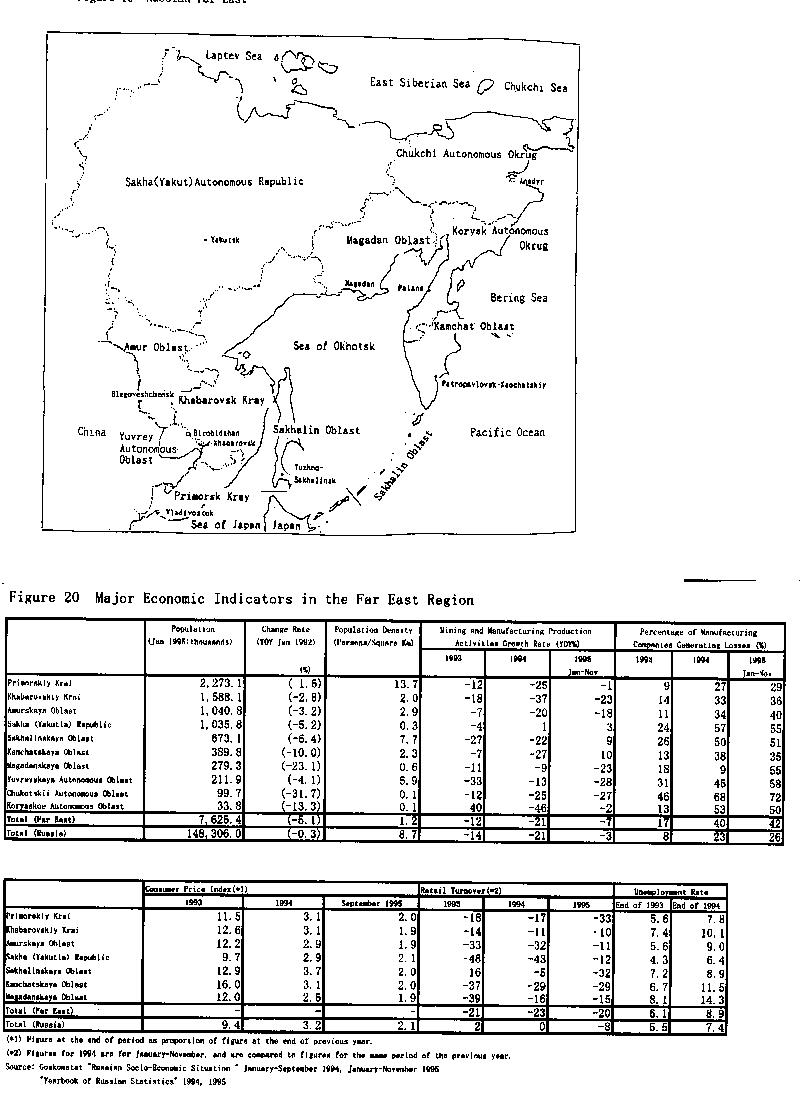
The Russian Far East is a federal system consisting of ten regions including the Primorsk kray, Khabarovsk kray, Amur oblast, Sakha autonomous republic, and Sakhalin oblast. It has a total population of some 7.63 million (5.1% of the total population of the Russian Federation) and a land area of approximately 6.22 million square kilometers, or 16 times the land area of Japan (Figures 19, 20). The region is home to roughly 6% of the industrial production of the Russian Federation. Its major cities are Vladivostok (pop. 630,000) and Khabarovsk (pop. 620,000).
The progress of reforms in the Russian Federation was accompanied by a deepening of economic problems in the Russian Far East. During the former Soviet period, the centrally-planned system included financial assistance from the center and policies to keep transportation costs low, and thanks to these measures the region created linkages with other remote domestic regions and was incorporated as the eastern extremity in the closed domestic distribution of industry.
With the progress of economic reforms, however, assistance from the center decreased and price liberalization led to a soaring of transportation costs. As a result, the economic linkages of the former Soviet period collapsed, and the region was plunged into an economic crisis more severe than most other places in Russia.
If we look at economic indicators for 1995, we find, as we saw in Chapter 1, that there are signs of stabilization in the Russian economy as a whole, but many indicators demonstrate that the situation in the Far East is as bad as ever, and large declines in production and investment are continuing at a rate above the Russian average. For instance, if we look at mining and manufacturing production for 1995, we find that in Russia as a whole the figures fell 3.0% compared to the year before, but that in the Far East they fell by 7.6% (Levintal [1996]). Furthermore, regional disparities have appeared. There were signs of recovery in 1995 in some parts of the region (Primorsk kray, Sakhalin oblast, and Kamchatka oblast) due to increasing exports of such items as marine products, natural gas, and coal, but other areas (such as Primorsk kray, Amur oblast, and Magadan oblast) have experienced large falls in production caused by a decrease in government orders for their manufacturing firms, which are mainly oriented toward military production, and the slow progress of conversion to civilian industries. Price rises have been average for Russia, but price standards are high, reflecting the cost of shipping goods from European Russia and Siberia. For example, the price for a basket of basic food commodities as of December 1995 was an average of $49 throughout the Russian Federation, and $59 in Moscow, but it was $108 in Yakhusk, the highest figure in Russia (Government of the Russian Federation [1995]).
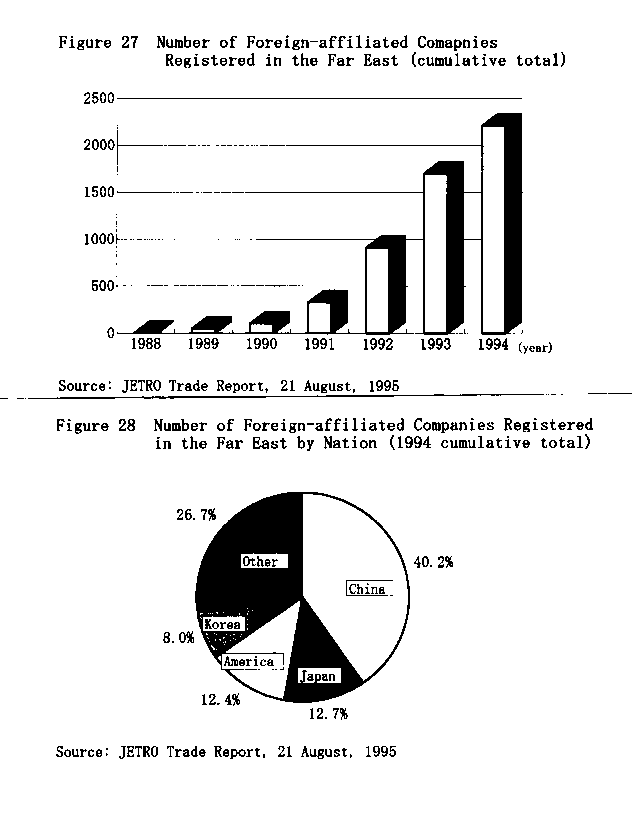
Reflecting the overall harshness of the economic situation, 42% of all companies in the Far East as a whole were posting losses as of November 1995 (the average for Russia is 26%). Investment, too, partly as a result of cuts in public investments from the federal government, had fallen by 1994 to just 20% of the level for 1990 (for Russia as a whole, the figure was approximately 30%)(Figure 21). Furthermore, more than 50% of the industrial structure of the Far East is food processing (mainly marine products), non-steel metals, and lumber, and investment levels are very low in these industries where antiquated machines and technology continue to be used. There are thus very few opportunities to renew these facilities. More than 2,000 foreign-affiliated companies are registered in the region, but it is believed that only one third are in operation (Levintal [1996]).
We can see, thus, that the Russian Far East's economy is in a more serious situation than the rest of the country, and there is still a long road to travel before it reaches stabilization. - Structural Characteristics of the Russian Far East Economy
The structural characteristics of the Russian Far East economy are, as will be seen below: a low population density; an industrial structure with a few varieties; obstacles, including high transportation costs, to price competitiveness; and a fiscal structure which is highly dependent on the federal government.- An economic space with a low population density
The population density in the Russian Far East, at 1.2 persons per square kilometer, is much lower than the average of 8.7 for the Russian Federation as a whole. There are some areas within the region with higher figures, such as the Primorsk kray, with 13.7, and Sakhalin oblast, with 7.7 (Figure 20).
During the former Soviet period, the Far East region was sustained by the policy of promoting migration for both national defense and natural resource development reasons and by various distribution policies that were part of the central-planned economy. During the three years following the collapse of the Soviet Union, however, social and natural decreases led to a drop of 400,000 in the population of the Far East.
This decrease in population led to a shrinking of the regional market, and in the future will be an impediment to the maintenance of the regional economy. In addition, economies of scale do not function in economic spaces with very dispersed populations and low densities, leading to high costs for factors such as the infrastructure which sustains social life, as well as to economic inefficiency in production and distribution activities. Given the distribution of the population and industry, as well as the volume of usable resources, it seems unrealistic to expect that the development of the region as a whole can be achieved, and for the present what is needed is regional development which promotes a concentration of population and industry in selected points such as the major coastal cities of Vladivostok and Khabarovsk, areas along the Siberian Railroad, and places with extractable mining resources. - A narrow industrial base
The industrial structure of the Russian Far East, in comparison to the rest of the Federation, is concentrated in two major areas: non-ferrous metals (21-23% of the total Russian production) and foodstuffs (11-12% of the national total)(Figure 22). On an area by area basis, the Primorsk kray is characterized by machinery and foodstuffs, Khabarovsk kray by fuel energy, iron and steel, machinery, and timber, Sakhalin oblast by fuel energy, foodstuffs, and Amur oblast by electricity, non-ferrous metals, and lumber.
In addition, it is believed that much of the machine industry is related to military demand, and the delay in converting to civilian production has become a significant issue. Added to the problem of lack of funding for this conversion, the lack of sales networks for civilian goods and the difficulty of assessing needs has meant that many firms have been unable to convert to civilian production.
In terms of non-ferrous metals, minerals such as diamonds, gold and tin are extracted, mainly in Sakha autonomous republic. This region accounts for a large part of the total Russian production - making up 89% of total diamond, 80% of tin, and 50% of gold extraction. However, rises in production costs, largely due to fuel energy prices, as well as the high costs of transportation, especially since the long distances make processing and distribution costs high, have prevented companies from turning profits. In fact, there have been mine closures and many of the firms face a difficult business situation.
The region has ample natural gas, petroleum, and coal, but the development of these resources has been slow. The total output of coal accounts for roughly 10% of total production in Russia, but for natural gas and oil the volumes are insignificant (OECD [1995]).
Moreover, the existence of these abundant natural resources has contributed to a rise in resource nationalism, which has tended to further increase the restrictions on production, and this is regarded as an obstacle to the introduction of foreign capital. For instance, the Product Sharing Law (PS Law) which was passed in 1995 at a time of rising resource nationalism, included a requirement that agreements which involved developments of strategic importance be approved according to a separate federal law, and the provision that the Russian side could unilaterally change the contents of the agreements in accordance with Russian civil law if there were major changes in the environment. These legal changes will have a serious impact on future decisions by foreign investors. - Obstacles, including high transportation costs, to price competitiveness
Some of the major factors contributing to the loss of competitiveness of industry in the Far East include the rising costs of raw materials, including fuel energy, and transportation. This reflects the fact that under the former planned economy, industrial location was decided without regard for the cost efficiency of transportation and distribution between firms, and economic linkages were established to bring energy and agricultural products in particular across the continent from Siberia and Central Asia. The division of production network went as far as European Russia, Central Asia, and Siberia, and this network was sustained by the fact that transportation costs could be ignored. With price liberalization, however, the economic inefficiency of this system became apparent. This region was so severely affected by the economic reforms because of its location as the eastern extremity under the former Soviet system.
For example, the total demand for petroleum products in 1993 was 13.6 million tons, but the region's refineries (at Khabarovsk and Komsomol'sk) only supplied 7.8 million tons, leaving a deficit of 5.8 million tons that was brought in, mainly from Siberia. Because the pipeline only reaches as far as Irkutsk oblast, however, it had to be transported by railway (OECD [1995]). Freight transportation fees to the Far East are discounted by 50% if the total distance is 3,000 kilometers or above, but even with this discount, the price for transporting one ton of petroleum for 6,000 kilometers (from Western Siberia to Vladivostok, for instance) was roughly $70 as of November 1995, meaning that even if domestic crude oil prices were low the price would be at least equivalent to and perhaps even higher than international oil prices. The domestic price competitiveness of manufactured products from the Russian Far East is being seriously undermined. - A fiscal structure highly dependent on the federal government
Because the public finances of the Russian Far East have a high degree of structural dependence on the federal government, the cuts in transfers from the center accompanying the contractionary budget policies of the federal government have led to reductions in public expenditure in the region.
If we look at revenues, we find that with the reductions in transfers to outlying areas caused by the federal government's contractionary policies, local governments in regional areas become more dependent on taxes for their revenues. On average this degree of reliance rose from 78% in 1994 to 87% in the first half of 1995. If we look at the Far East, however, we find that the reliance remained unchanged, moving from 69% to 68%. The remaining revenues were in the form of transfers from the federal budget and the special regional subsidy funds, indicating there is still a high degree of dependence on the federal government.
As a result of the relative decrease in funds from the federal government, added to decreasing tax revenues in the Far East, the ratio of government outlays (including transfers from the federal government) to GDP in the Far East region fell from 1.8% in 1994 to 1.4% in the first half of 1995.
- An economic space with a low population density


Part 2. The Asia-Pacific Region and the Russian Far East Economy
- Economic Linkages with the Asia-Pacific Region
The hidden potential of the Russian Far East economy can be found in the fact that it borders the Asia-Pacific region, which is both a center of world growth and contains nations at diverse stages of development. We believe the future direction for the Far East will be to develop this hidden potential by exploiting its abundant resources and building an industrial structure based on an international division of labor with the Asia-Pacific region.
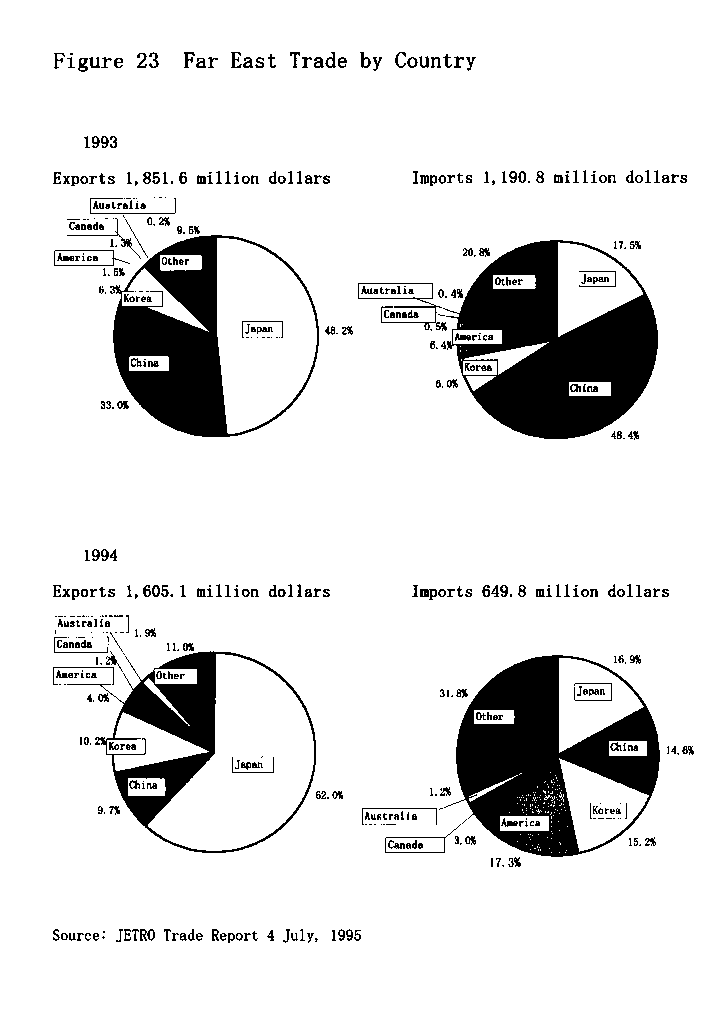
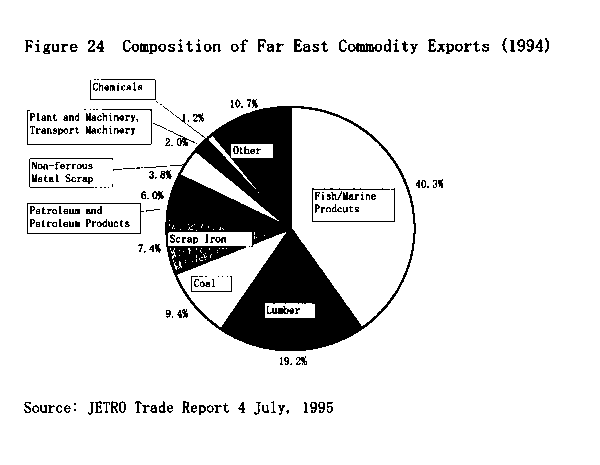
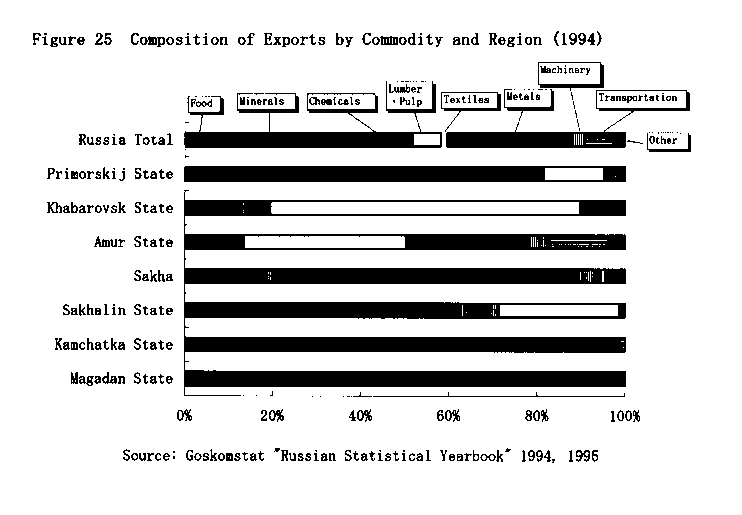
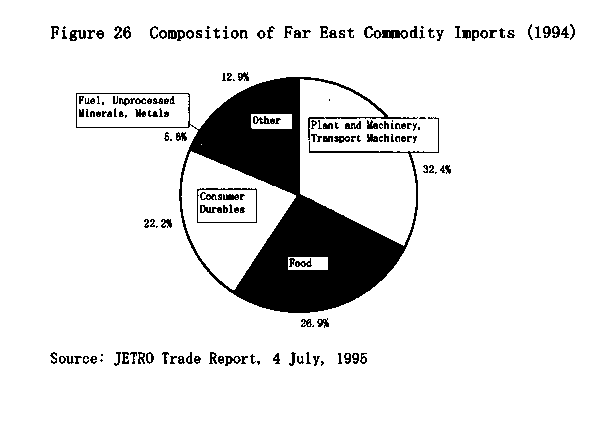
If we look at recent trade statistics for the Russian Far East, we find that the four countries of Japan, China, South Korea and the United States make up 80-90% of its exports and 60-80% of its imports (Figure 23).The main exports are fish products, lumber, coal, petroleum products and scrap iron, of which the first two account for 50-60% of total exports from the Russian Far East (Figure 24).They are thus its major trading partners, and it is here that we can find the beginnings of new economic linkages (Figure 24). The main export items include fish products, lumber, coal, petroleum, petroleum products and scrap iron - the first two of which together account for 50-60% of total exports from the Russian Far East. It must be noted, however, that the composition of exports varies widely from area to area (Figure 25). Imports mainly consist of machinery and equipment, transportation machinery, foodstuffs, and consumer goods (Figure 26).
If we look at foreign direct investment, we find that, as with trade, most comes from the same four countries, Japan, China, South Korea and the United States (Figures 27, 28).
Given the present situation, there is still a long way to go to build economic linkages by promoting exports to the Asia-Pacific region and bringing in foreign capital, but it should be noted that trends in this direction have already emerged in the few years since the beginning of the reforms. The possibility exists for the Russian Far East to develop its potential through trade and investment activities within a web of mutually interdependent relations in the Asia-Pacific region, which is its natural economic sphere. Given the realities of its enormous distance from Moscow and the rest of European Russia and the high costs of transportation from that region, on one hand, and its closeness to the fast-growing Asian region, which is one of the world's growth centers, we find that the key for the Russia Far East to overcome the difficulties it now faces will be to integrate into the world economy through economic linkages with the Asia-Pacific region. - The Russian Far East in the Asia-Pacific Region
When forming economic linkages with the Asia-Pacific region, it is important for the Russian Far East to develop an international division of labor based on its comparative advantage and its complementarity with other economies. The debate should focus on what industries the region should develop.
If we look at the question of what commodities this region can provide, we find, as we saw in the first section, that its main industries include non-ferrous metals, marine products and other processed foods, machinery and lumber.
For processed foods and timber, there is room to increase international competitiveness in terms of both price and quality by upgrading the antiquated equipment and processing technology. As far as machinery is concerned, the problem remains the delay in changing the mainly military-oriented production to civilian use. In terms of energy, production of coal already accounts for 10% or so of total Russian production, and it is being exported, but there has been virtually no development or production of the abundant reserves of petroleum and natural gas.
We begin from the question of how well demand in the Asia-Pacific region matches the supply structure of the Russian Far East.
In the mid-term, energy demand looks promising. It will expand rapidly if the current high growth in the Asia-Pacific region continues into the future. For instance, energy demand for the big ten APEC Asian economies (excepting Japan) is projected to grow by 2010 to more than 2.3 times the figure for 1992, but energy supply will only grow by 1.9 times, meaning that the rate of dependence on energy from outside the region is projected to grow from 6.1% to 24.1%. In particular, projections are that reliance on sources outside the region for supplies of natural gas, which is being promoted as an effective environmental policy, will grow from 9.0% in 1992 to 26.6% in 2010, and it appears that the countries of the region are now being confronted with the need to consider whether to import from the Middle East, where political instability leaves doubts over whether a stable supply can be maintained, or to develop new natural gas fields within the region. Some countries within the fast-growing Asia region are still heavily dependent on coal, and if countermeasures are not taken against the precipitation of sulfur oxide, which is one of the causes of acid rain, there is a possibility that by the beginning of the 21st century the levels of acid rain in the region will exceed those of Europe (National Land Council Planning Committee [1995]). Given this situation, it is projected that there will be an increase in demand in the region for natural gas, which emits practically no sulfur oxide and 60% lower carbon dioxide than coal. There are thus hopes that the abundant natural gas resources of the Russian Far East can be developed and a pipeline built to transport it to the Asia-Pacific region.
Given what we have seen above, we can well conceive that in the medium to long term the Russian Far East will be able to develop an industrial structure on the basis of its comparative advantage, principally its abundant natural resources.
If this case, the strategy will have to center on natural resource-based industries such as forestry, non-ferrous metals, and fishing and processing of marine products while it awaits the development of the energy sector, including the completion of projects that are currently underway in Sakhalin oblast. It is conceivable that it will be able to upgrade its industrial structure gradually, by carrying out high value-added processing for these export commodities while taking into consideration the market needs of the Asia-Pacific region. In order to do this, it will have to remove antiquated equipment and processing technology, which will require the promotion of investment. On the other hand, in areas such as grains, vegetables and light industries, where it is at a comparative disadvantage given environmental factors and the competition of neighboring countries, it should promote imports from its neighbors, and through abundant, low cost imports of food and daily necessities it will be able to begin a process of increasing real wages.
There is thus a need to begin, in a positive way, to transform the industrial structure of the Russian Far East, and the key to doing this will be the promotion of investment. In particular, three areas, namely, a) large-scale investment for natural resource development, b) investment in processing of natural resources, and c) investment for conversion from military to civilian production, will be very important for this process.
Part 3: The Direction of Russian Far East Policy
Given the basic directions set out in the previous section, as with Russia as a whole, the encouragement of investment and structural change in industry will be required, but so too will policies which deal with the future of the economy in the context of the Asia-Pacific region. Further, it will be necessary to pursue comprehensive policies which include the whole of the Russian Far East. In this regard, it is desirable that the Far East Long Term Development Program which is currently being prepared by the Russian Federal Government, be developed from such a standpoint and that it be systematically implemented.
- Promotion of Investment
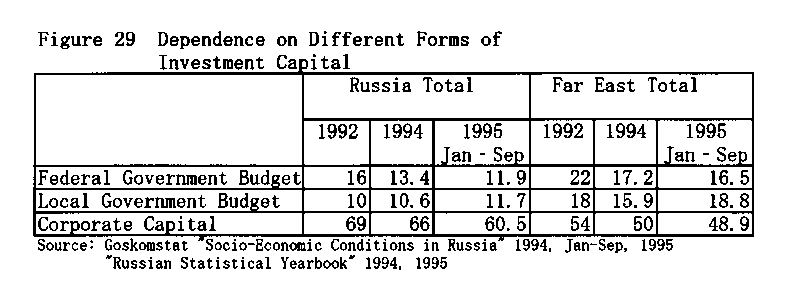
The reduction in investment in the Far East since the reforms has been greater than the average for Russia as a whole and dependence on the federal and regional government budgets, which was already large, has become even larger. Consequently, investment by corporations is now less than 50% of total investment (Figure 29). On the other hand, the savings of the Russian Far East amount to 3% of total Russian savings and corporate settlement funds and savings to 5.5% of the total for Russia. Of the 2,571 commercial banks in Russia, 134 are active in the Far East and Vladivostok, which already has a stock market and an exchange market, is gradually being developed as a financial center. While continuing with these developments, structures to absorb and utilize the profits and foreign exchange gained from natural resources to promote investment in the Far East should also be explored in the future. - The Asia-Pacific Viewpoint
The introduction of foreign capital is indispensable if the Far East is to build the kind of economic linkages with the Asia-Pacific region set out in Section 2. But, first of all, conditions must be put in place to attract and promote investment by foreign companies. In particular, the companies of the major investor countries, America, Japan and Korea, compare the Russian Far East to other possible investments in the Asian region and look at the total picture including profit, cost, risk, and investment environment when they decide whether to invest or not. As the scale of investment needed for resource development projects in the future increases, investment decisions have to be medium to long term and will only be taken after serious consideration so the creation of an attractive investment environment and the minimization of risk will be of increasing importance. In such situations, the provision of accurate and highly transparent information about local companies will be a great advantage. Similarly, the establishment of complaints handling organization to deal with trade and investment matters will also be important in overcoming any lack of transparency in systems and procedures.
Moreover, in order for the local government - several thousand kilometers from Moscow and with a time difference of 6~9 hours - to have flexibility in the execution of policy, it is necessary to consider the partial delegation of the powers of the federal government within the limits that do not interfere with the economic management of Russia as a whole.
Unfortunately, the conversion from a military to a civilian based economy has been slower than expected and, because of the lack of civilian demand, there is a trend towards increasing military production again. Since these products are being exported cheaply to neighboring countries, the result is inevitably increased instability in the security and defense of the Asian region. A much higher level of support is needed from the advanced Western countries, including Japan, to assist the conversion from military to civilian production.
CONCLUSION
In terms of macroeconomic indicators, including the reduction in inflation and the bottoming out of the decline in production, there are signs that the Russian economy is achieving stabilization which was the objective of the first stage of the reforms directed towards creating a market economy. The economy is now entering a new phase, the second stage of the reforms.
In this report, we make several proposals about policy directions to deal with the new problems associated with the second stage of the conversion to a market economy and their solution.
(Sustained Growth through Exploitation of the Market Mechanism)
The Russian economy as it enters the second stage of the reforms is at a turning point - either it will achieve sustained growth or sink into the stagnation trap.
In other words, as indicated by the continuing decline in investment, the deregulation of the economy and macroeconomic stabilization achieved so far have not translated directly into autonomous and vigorous economic activity on the part of corporations and households acting on a medium to long term perspective. In this report, we called the current state of the Russian economy the stagnation trap. This is a vicious circle in which, on the one hand, corporations and households pursue immediate profit and rely on the government to bail them out or look for short term profits by continuing to use customary practices, and on the other, faced with the magnitude of the social cost and the confusion into which the whole economy is likely to be plunged as a result of such activities, in the end, the government steps in to save the situation.
The question is how should the policies which are necessary to move the Russian economy onto a sustained growth path - that is, encouragement of investment and structural change in industry and regional economies - be implemented. We consider that it will not be achieved by a simple method such as the government directly intervening in the distribution of resources. Rather, even though it may be a difficult task, it can only be achieved by removing the factors which create the stagnation trap and by stimulating the autonomous economic activities of corporations and households in accordance with the principles of a market economy. It is only through the formation of such a growth foundation that the objectives of the second stage of the transition to a market economy - that is, the transition to a sustained growth path by means of the market mechanism and the integration of the Russian economy into the world economy - can be achieved. From this point of view, the basic thrust of this report can be summarized in the following three points:
- the removal of systems and practices which permit inefficient economic activities based on customary practices;
- the creation of an environment, especially the minimization of uncertainty, which encourages economic agents to undertake activities based on a medium to long term perspective;
- the introduction of structures which encourage economic agents to engage in rational economic activity.
(Economic Development of the Russian Far East through to the twenty-first Century)
In the second chapter of the report, we discussed the future development of the Russian Far East. This was not only because of a geographic interest in the area because of its proximity to Japan. The Russian Far East - the eastern extremity - was included in the artificial and uneconomic distribution of industry under the former system. Consequently, it is one of the regions in which the economic problems following the transition to a market economy and the collapse of former economic linkages have shown up most starkly. The economic revival of the Russian Far East is one of the most challenging examples of the need for structural reform in industry and regional economies and at the same time, is a prime example of what the objective of the second stage of the reforms - integration into the world economy - means in practical terms (our attempt here represents only the first step in this direction).
We suggested that the direction of economic growth in the Russian Far East should be towards becoming dynamically involved in the international division of labor, with an emphasis on linkages with the Asia-Pacific region. This is not only because Asia-Pacific, especially the Asian region including China, is experiencing remarkable development and becoming the hub of the world economic growth. It is also because the threat to the global environment presented by the consumption of vast amounts on energy as a result of the rapid growth in the Asia-Pacific region is before our eyes. The Russian Far East can play an important role in the solution of these problems. The problems of the Russian economy and particularly the Russian Far East should not be treated as problems peculiar to countries in transition to a market economy, but in the context of a globalizing world economy and from a long term perspective looking through into the Twenty-First century.
(Towards Greater Sharing of Knowledge)
The first stage of the reforms saw the confusion which followed the transition to a market economy brought under control, and the stabilization of the macroeconomy, particularly the amelioration of hyperinflation. Then followed the creation of the actors in a market economy through the privatization of government enterprises and so on and the establishment of laws and systems which provide the basis and rules for market activities. In this process, the issues faced by all of the transition economies in Central and Eastern Europe and the former Soviet Union had much in common. The establishment of transitional economics was a response to these developments. In contrast, once the economy has been stabilized and moves towards the second stage of reform toward expansion and growth, the distinctive features of each of the economies become increasingly important factors and the problems increasingly varied and complex. From another point of view, this represents the fruits of reform - that is, a wider range of choices becomes available with respect to the direction each economy should aim for. However, differences and peculiarities should not be over-emphasized. "This country is different, professor. You don't understand."(21) If these words represent a rejection of mutual understanding, then they will have a negative effect not only on the transition to a market economy but also on cooperative development in the world economy as a whole. What is needed is a common language to explain the differences and peculiarities of individual economies and to make the effort to take advantage of the accumulated wisdom of the past. In this sense, our report is neither a novel or startling idea nor a cure-all for the present problems. Rather we hope it will make a contribution, however small, to the sharing of knowledge and to the deepening of mutual understanding.
NOTE (21): In the Foreword of Pierre-Richard Agenor and Peter J. Monteil (1996), Rudiger Dornbusch warns that this report is repeated all too often in relation to developing or transition economies and results in the rejection of a vast body of knowledge and experience which could be directed to solving these countries' problems.
Glossary 1. The Stagnation Trap
In terms of game theory, the stagnation trap can be described as the prisoner's dilemma
First each company considers whether it will adopt policies (investment) to increase productivity. If it does undertake investment, the company will incur costs but at the end of the period, it will be able to obtain a larger income than if it had not invested. However, the size of the income which is gained as a result of investment is influenced by the following two factors. First the behavior of other companies. Generally speaking, it would be reasonable to assume that, if other companies also undertake similar investment activity, because of competition the returns to a particular company will be smaller than if they had not. But in the case of the Russian economy, because of the present large inefficiencies, if a large number of companies invest and raise their productivity, it is not unrealistic to assume that externalities will come into play and the returns to a particular company will actually increase.
The second factor is the government's behavior. In principle, the government should not interfere in private economic activity, but if large numbers of companies fail to invest and as a result, the government is faced with a serious problem of declining incomes, then it has to provide subsidies to rescue the situation (increase in the money supply). In this case, the burden is born by all economic agents in the form of an inflation tax. In turn, the real earning rate of the company which invested is undermined by inflation. In other words, a part of the earnings which should have been obtained is squeezed by companies which did not invest because of the government's intervention.
The game based on these assumptions is as follows.
- In the case where one's own company invests and other companies invest, since there is no intervention (= relief) by the government, there is no draining off of returns and so with the impact of the external economy, a high net return can be expected.
- In the case where one's own company invests and other companies do not invest and the companies that do not invest are the majority, the government will offer relief and the net return b will be smaller than a because of the draining off of income by the inflation tax.
- If one's own company does not invest but other companies do and they are the majority, if the government offers relief, then this time one's own company benefits from the inflation tax an the return is e (>c).
- In the case where neither one's own company nor other companies invest, the government will take action and the return will be c - that is, the level in the case that investment does not occur. (In this case, government relief does not improve the supply side of the economy so it does not have any real effect.)
In the above situation, with respect to the size of b and c, if b<c, the game is as shown in the table below. If we start from the situation where neither company invests, this situation (in which either does not invest) is a Nash equilibrium, and even though economic welfare would be higher if both take the strategy of investing, the incentives for both to break out of the existing situation do not work.
| Own Company's Strategy | |||
|---|---|---|---|
| Invest | Do not Invest | ||
| Other Companies' Strategy | Invest | a,a | e,b |
| Do not Invest | b,e | c,c | |
Glossary 2. Changes to Bankruptcy Procedures
The Bankruptcy Law came into effect in March, 1993. However, the provisions of that law make the procedures of going through the Arbitration Court complex and time-consuming so that, in a situation of high inflation, the real value of credit is lost in the course of the lengthy legal procedures. Moreover, the fact that external creditors don't expect to get much out of bankruptcy proceedings because priority is given to the payment of wages and other interests of insiders means that there is very little incentive for creditors to institute bankruptcy proceedings at court. In order to overcome these problems and speed up bankruptcy procedures, a new process was introduced by Presidential Order (effective mid-1994). This involved the establishment of a new Federal Bankruptcy Agency (FBA) and a system by which, in the case of companies in which the State holds 25% or more of the shares, the State can commence bankruptcy proceedings on its own initiative even if the creditors do not make any application.
Of the approximately 4,000 companies to which this system applies, by July, 1995, 2,018 had been declared insolvent by the FBA, but the proportion that has actually gone into bankruptcy or been reorganized is extremely small. Usually all that happens is that State sells its share-holding and the company is required to reorganize itself through the process of privatization and so on. There are various reasons for this failure to deal effectively with insolvent companies. Large companies, particularly those in regional areas, frequently provide social services such as housing and medical care. Therefore, one important factor is the opposition to the loss of social services that would result from the winding up of the company. When a company goes into liquidation, the local government is required to take over the social services but many local governments take a very negative attitude to doing so on the grounds of financial difficulty.
Decisions of the FBA(Number of companies)
| Type of Decision | Jan.,1995 | Apr.,1995 | July,1995 | ||||
|---|---|---|---|---|---|---|---|
| Total | Federal | Local | Total | Federal | Local | Total | |
| Sale of State Holding | 47 | 113 | 50 | 163 | 183 | 85 | 268 |
| Liquidation | 14 | 26 | 23 | 49 | 51 | 30 | 81 |
| Privatization | 38 | 111 | 69 | 180 | 244 | 122 | 366 |
| Application to the Arbitration Court |
8 | 26 | 15 | 41 | 38 | 21 | 59 |
| Request for Shareholders Meeting |
2 | 2 | 0 | 2 | 4 | 0 | 4 |
| Recoverd* | 41 | 78 | 28 | 106 | 142 | 41 | 183 |
| Other | 33 | 1 | 123 | 275 | 1 | 276 | |
| Total | 183 | 122 | 186 | 664 | 937 | 300 | 1237 |
*Companies found funds to pay back to creditors
Source:FBA
- Government of the Russian Federation
- "Russian Economic Trends 1995 Vol.4 No.2"
Glossary 3. The Separation of New and Old Accounts (22)
It is a principle of the market economy that when a company which is carrying a large amount of bad debts becomes insolvent, it is dealt with by bankruptcy or reorganization but when a majority of companies is in this situation, in practice, it becomes impossible to deal with the problem by the bankruptcy process alone. Moreover, if the process becomes lengthy, the social cost increases enormously. In Japan after the Second World War, because wartime debts became bad debts, most companies were in an extremely precarious financial position. In order to solve this problem, the Japanese government implemented the following policies. Policy provided for two separate schemes; one for dealing with the debts of financial institutions and another for the debt of non-financial, private corporations, although the basic framework was the same for both. The example of a non-financial institution is explained simply below.
NOTE (22): For the original argument, see Toshihiro Kodama, 'Industrial Policy and the Transition to a Market Economy in the Central and East European Countries - the Relevance of Japanese Experience' MITI Research Review, No. 4, and Takeo Hoshi, "Cleaning up the Balance Sheets: Japanese Experience in the Postwar Reconstruction Period" in Aoki and Kim
- Following the introduction of the Law for Emergency Measures to deal with Company Accounts in August, 1946, the companies to be reconstructed were to divide their balance sheet into new and old accounts as of 11 August, 1946. As in the table below, the assets side of the new accounts was to be the minimum assets necessary to continue the company's normal operations and the liabilities were to be a debt against the old accounts. The assets on the old accounts were all assets other than those transferred to the new accounts and claims equivalent to the liabilities on the new accounts and, on the liabilities side, all liabilities and capital. The significance of the separation into old and new accounts is that (as discussed below), even during the process of settling the old accounts, normal operations can continue (that is, the deterioration in corporate activity usually associated with liquidation procedures does not occur) and that the companies current performance is clearly reflected in the new accounts. Further, in this process, companies were required to appoint special administrators (in principle, two from within the company and two representatives of the creditors). These administrators were obliged to plan the reconstruction of the company and report to the Ministry of Finance, and were responsible for guiding and managing the reconstruction process. Hoshi (1995) concludes that through this process, particularly on the part of the creditors, that is the financial institutions, there was an accumulation of know-how about the monitoring of company performance by main banks which later became a feature of corporate governance in Japan.
- The second stage was the settling of the old accounts in accordance with the Corporations Reconstruction and Reorganization Act (October, 1946). That is, those of the company's debts which could not be repaid because of the end of wartime compensation or the forfeit of overseas assets were designated special losses and these were disposed of in the following order - income on the old account, capital gain on the old account, 90% of capital, 70% of liabilities, 10% of balance of capital, and 30% of balance of liabilities. In other words, special losses were born by the company's shareholders and creditors. On the other hand, in the case of the reconstruction of financial institutions, the government compensated for the balance of definite losses on the old accounts which could not be recovered by issuing 5-year bonds. According to Hoshi (1995), the reconstruction of non-financial institutions took a much longer time than financial institutions because of various obstacles such as the dissolution of the zaibatsu, major conglomerates in prewar period, as part of the postwar reforms and the possibility of payment of reparations in kind to the victorious countries. However, during this period, due the effect of inflation, the income from reevaluation was greater than expected and so the burden on the shareholders and creditors was much less than expected.
- Finally, once the settlement of special losses was complete, the old and new accounts were reintegrated and recapitalized. At this stage, the company's survival or closure, the partition of the company, or the establishment of a second company by one going into closure, was decided. According to Kodama (1994), of the 4695 companies which implemented the Corporate Reconstruction Plan, 3637 survived and of the remaining 1058 were disbanded. Also, 417 new companies were established either by the dismembering of existing companies or were established as second companies by those which went out of business.
In terms of what the transition economies can learn from this experience, Hoshi (1995) lists the following points.
--- With respect to the large scale reconstruction of companies, alternative, practical means other than bankruptcy through courtroom processes are available.
--- The separation of accounts makes it possible to reconstruct companies without interfering with the continuation of company operations.
--- The reconstruction process has an important effect on the subsequent development of corporate governance.
--- Coordination with anti-monopoly policy during the reconstruction process is both possible and necessary.
--- Debt-equity swaps is a useful tool for recapitalization following the reintegration of accounts.
--- Inflation had the effect of lowering the burden on creditors during the reconstruction but reconstruction which relies on inflation will damage the credibility of anti-inflation policies.
| Assets | Liabilities | |
|---|---|---|
| Old Accounts |
|
|
| New Accounts |
|
|
Glossary 4. Financial and Industrial Groups
A financial and industrial group is a group consisting of one or more financial institution (bank) and a number of non-financial corporations. There are those which arise spontaneously between a bank and a number of companies and which do not have any government involvement and others which are registered under the government system and receive special treatment as discussed below. The formation of financial and industrial groups was adopted as government policy by Yeltsin in 1994. The first group registered was Ural Factories and by February, 1996, 32 groups had been registered (Afansiev, 1996). On the one hand, groups that are formed spontaneously by private companies are created in a number of ways. A bank or its holding company form a group under its control by acquiring shares in those companies. Alternatively, upstream and downstream processors in a particular industry or companies in related industry sectors may get together to form a group. Reportedly, many of these spontaneously formed groups are showing a strong interest in becoming registered groups in order to obtain special treatment.
The methods by which groups are formed under government direction include joint investment by members of the group to create a new company; one particular company in the group holding the shares of all the other companies; or entrusting the crossholdings of shares by the group companies to one particular company. The special treatment available to special registered companies includes placing the government's share holding in trust with the group; the government supplying part of the investment capital; giving a government guarantee to group investment; and in cases where the group includes companies from the CIS countries, giving special treatment to those companies for the repayment of debt to Russia. In order to obtain registration, the government must be satisfied that the group's business is of strategic importance to the country and that the group is making sufficient effort towards rationalization but the criteria of judgment are not transparent.
The primary object of the financial and industrial groups is to promote investment by joining finance and industry but a variety of other benefits can also be expected. These include improved external capital raising ability because of increased credit-worthiness resulting from the formation of the group; efficient utilization of resources within the group (joint marketing, materials acquisition, logistics, and so on); preventing the accumulation of debt between corporations(simplifying the canceling out of debts and credits); mutual assistance among companies of the group (bankruptcy prevention); and improved economic relations with the CIS countries.
Analysis of the way in which these groups are managed remains an issue for future study but there is one study available, a study of the Ural Factories by Tselichtchev (1995). In the case of Ural Factories, the highest governing body is, of course, the General Meeting of shareholders but, below this, an Auditing Committee (the equivalent of the Board of Directors) has been established and constitutes the headquarters of the group. The Auditing Committee consists of a number of CEOs, among whom functional responsibilities for administration, finance, procurement, sales, research and development and so on are divided. The Committee also determines management strategy for the group as a whole and adjusts and coordinates activities within the group.
The government is promoting the formation of financial and industrial groups. In his Annual Address, President Yeltsin, while expressing great hope in the formation of such groups in the base metals, chemicals, petrochemicals and military demand sectors, also indicated that there would be positive moves to establish such groups not only in the manufacturing sector but also in the international finance sector.
Reference
- National Land Development Council, Planning Committee. 1995. (in Japanese)
"Grand Design for Land Planning in the 21st Century - A New Approach to Comprehensive, Nation - Wide Development Planning" (in Japanese) - Kodama, Toshihiro. 1994. "Industry Policy and the Transition to a market economy in the Central and East European Countries - the Relevance of Japanese Experience." MITI Research Review, No. 4 (in Japanese)
- Advisory Committee for Energy, International Energy Committee. 1995. Interim Report (in Japanese)
- Tselichtchev, Ivan. 1995. "What happens in the Russian Economy" Nikkei (in Japanese)
- Fujime, Kazuya. 1995. "Outlook for Long - term Energy Demand and Supply in the APEC Countries" Journal of Energy Economy Vol. 21 No. 12 (in Japanese)
- Miyabe, Junichiro and Hanada,Tomoko.1994." Russian Manufacturing Industry in the Transition Period - the Emergency of Private Industry" Zaikai Kansoku" August, Nomura Research Institute (in Japanese)
- Murakami, Takashi. 1996. "The Economy of the Russian Far East and the Asia-Pacific Region" Papers for the International Symposium on Russian Economic Reform, Economic Planning Agency (in Japanese)
- Hoshino Committee on Economic Reform in Russia. 1995. "The Present State of the Russian Economy and Issues for the Future" Joint Research Report on Intellectual Support for Russia, Japan Research Institute. June (in Japanese and in Russian)
- Afanasiev, Mstislav. 1996. "Promotion of Investment in Russia" Paper for the International Symposium on the Russian Economic Reform, Economic Planning Agency
- Agenor, Pierre-Richard and Peter J. Montiel. 1996. Development Macroeconomics. Princeton
- Aoki, Masahiko and Hyung-Ki Kim eds.1995. Corporate Governance in Transitional Economies. World Bank
- Gavrilenkov, Evgeny. 1996. "Macroeconomic Performance and Macroeconomic Policy in Russia" Paper for the International Symposium on the Russian Economic Reform, Economic Planning Agency
- Government of the Russian Federation. 1995. Russian Economic Trends. London: Whurr Publishers
- Krugman, Paul. 1994. "The Myth of Asia's Miracle" Foreign Affairs 73(6): 62-78
- Lehmann, Harmut. 1995. "Active Labor Market Policies in the OECD and in Selected Transition Economies" World Bank Policy Research Working Paper 1502
- Leitzel, Jim. 1995. Russian Economic Reform. London and New York: Routledge
- Levintal, A. B. 1996. "Development of Far Eastern Russian Economy: Trade, Investment and Development Policy" Paper for the International Symposium on the Russian Economic Reform, Economic Planning Agency
- Maddison, Angus. 1987. "Growth and Slowdown in Advanced Capitalist Economies" Journal of Economic Literature 25: 649-698
- OECD. 1995. OECD Economic Survey the Russian Federation 1995
- OECD/IEA. 1995. Energy Policies of the Russian Federation. OECD
- Sakurai, Makoto. 1996. "Investment Promotion Policies in the Russian Economy "Paper for the International Symposium on the Russian Economic Reform, Economic Planning Agency
- Tselichtchev, Ivan. 1996. "Macroeconomic Stabilization in Russia: Progress and Problems" Paper for the International Symposium on the Russian Economic Reform, Economic Planning Agency
- World Bank. 1995. Russian Federation towards Medium-Term Viability. Report No.14472-RU. World Bank
- Zaitsev, Valery. 1996. "Economic Reform in the Russian Far East: Trade Investment and Development Policy" Paper for the International Symposium on the Russian Economic Reform, Economic Planning Agency
TABLE OF CONTENTS